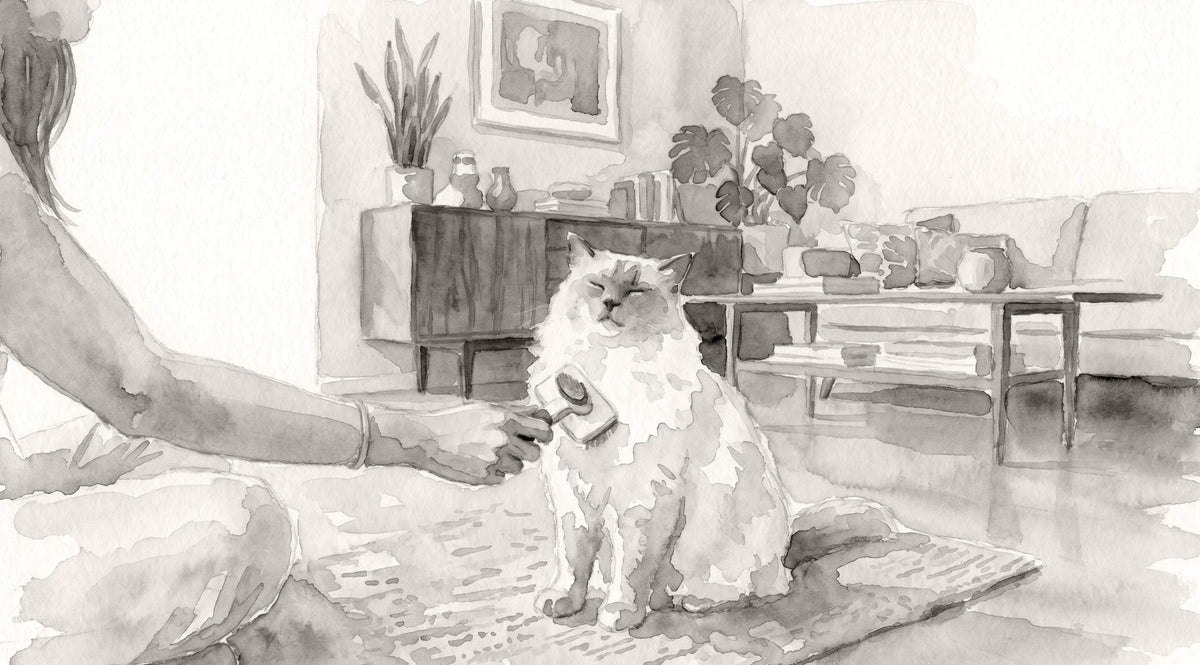
Meow-ster Class: Tips for Brushing Your Cat
If your cat sheds like it’s a competitive sport or leaves a fine layer of fur on every surface you own, brushing isn’t optional. It really isn’t anyway. It’s one of the simplest ways to keep her comfortable, reduce hair around your home, limit hairballs, and prevent tangles before they turn into something more serious. The key is doing it in a way your cat tolerates, and you’ll probably find that she actually loves it when done correctly.
First, understand
Brushing isn’t just about appearance. It removes loose hair before your cat can ingest it during grooming, and it also distributes natural oils through the coat, keeping fur smoother and skin healthier. Different coat types benefit from different approaches, though. Short-haired cats benefit from occasional brushing to remove loose fur, while long-haired cats require more frequent sessions to prevent mats. And if your cat has a dense undercoat, you’ll need to reach beyond the surface to make brushing effective.
Choose the right brush
Not all brushes do the same job. A slicker brush works well for removing loose fur and light tangles, especially on medium to long coats. A bristle brush is better for smoothing and finishing. For cats with thicker coats, an undercoat rake or deshedding tool can help remove deeper layers of loose hair.
Start simple. Choose one tool and see how your cat responds before introducing others. The goal is to find something that works without irritating her skin or overwhelming her.
Set the scene
Brush your cat when she’s relaxed, like after a nap or a meal. Trying to brush a cat in full play mode is usually a losing effort. Choose a quiet space where he feels comfortable and not cornered, and let him settle into a natural position, whether that’s in your lap or beside you. Keep your movements slow and deliberate, approaching brushing as a calm routine. Your cat is more likely to accept and enjoy this than something that feels like a chore.
Start slow
If your cat isn’t used to brushing, ease into it. Begin with a few gentle strokes along her back, where most cats are comfortable being touched. Avoid sensitive areas like the belly and legs at first. Alternate brush strokes with pets and scratches from your hand so they begin to blend together in her mind.
Watch her reaction closely as you introduce brushing. If she leans into the brush or stays relaxed, continue. If she tenses or moves away, stop before it turns into resistance. Aim to build tolerance with small successes, not test limits.
Work with the coat
Always brush in the direction of hair growth. This keeps the experience comfortable and prevents pulling. Use light pressure at first, especially if you’re unsure how your cat will react. For thicker coats, use short, controlled strokes to work through the fur without snagging. Long strokes are not your friend with these fuller coats.
Handle tangles carefully
Mats don’t appear overnight, but once they form, they can tighten quickly. Never pull at a mat or try to rip through it with a brush. This is painful and will make your cat resist future grooming.
For minor tangles, use your fingers or a comb to slowly separate the fur, holding it at the base to reduce tension on the skin, and work it out gently. For anything more stubborn, trim carefully with scissors designed for pet grooming, keeping them angled away from the skin. If a mat is close to the skin or too dense to handle safely, it’s better to leave it to a professional.
Keep sessions short
A few minutes at a time is enough, especially in the beginning. End the session while your cat is still calm, so she associates brushing with a neutral or positive experience. Over time, you can extend sessions as her tolerance improves. Regular brushing, even in small amounts, prevents buildup and keeps the process manageable. If she shows any signs of irritation, like flattened ears or a flicking tail, it’s time to stop before the situation goes south.
Reward immediately
Reinforce good behavior right away. After each session, offer a treat, a toy, or whatever affection your cat responds to most. Keep your tone calm and positive so he connects brushing with something rewarding. If he walks away mid-session, let him go. The goal is voluntary participation, not control.
Make it routine
Brushing works best when it becomes part of your regular rhythm. Pair it with a consistent time of day so your cat knows what to expect. Over time, it becomes another familiar interaction rather than something to resist.
Consistency matters more than perfection. Some days will go smoothly, others won’t. Keep the experience predictable, low-pressure, and always positive. Most cats find it feels great once they’re no longer concerned with being “forced” to participate.

Leave a comment